Showing posts with label project ideas. Show all posts

Thursday, 26 March 2015

brain wave controled robot with mindwave headset

 brainwave controled robot

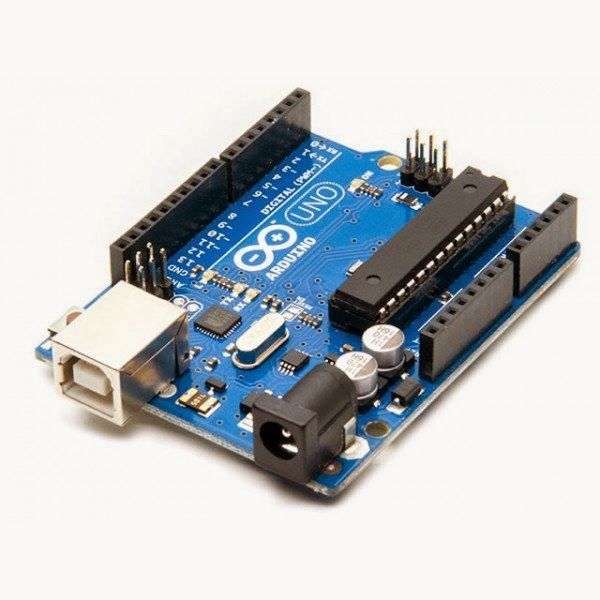
In this tutorial we discuss about how to control ur robot with ur brain
 components need 
  • arduino board (i used arduino uno)
  • driver ic (l293d)
  • mind wave head set
  • dc motor
  • battery
  • robot chasis
  • pc or laptop(must have bluetooth)
software needed
  • arduino ide
  • mindwave mobile
  • communication bridge
steps,,,
  • install mindwave mobile on your pc
  • install arduino ide
make the body of robot


the green coloured board is the motor driver module ,u can buy it as it is or make this with the l293d 

connect the driver with the 9,10,11,12 pins of arduino 


now your robot is ready , 
now you can control your robot with your attention,,,!!!!! is it cool?????
for that u want the mindwave headset


         switch on ur head set and pair it with ur computer or laptop, the name of the device is mindwavemobile
  • open mind wave mobile on your pc
then u will get a window like this

select brainwave visualiser


make sure ur headset is turned on,, ten place it on ur head
then u can see ur attention level and meditation level
                              according to this attention level u can control ur robot speed,,
more your attention more your speed.
                       for that open arduino ide and paste the code below
int i;
int x;
void setup() { 
 pinMode(13,OUTPUT);
  pinMode(9, OUTPUT);   
pinMode(10,OUTPUT);
pinMode(11,OUTPUT);
pinMode(12,OUTPUT);
Serial.begin(9600);

}
void loop() 

{ if(Serial.available())
{
  x=Serial.read();
if(x<30)
{
for(i=255;i>4;i--)
{digitalWrite(13,LOW);
  delay(10);
   analogWrite(10,i);
   analogWrite(11,i);
}
}
   if(x>30)
{
for(i=5;i<256;i++)
{digitalWrite(13,LOW);
  delay(10);
   analogWrite(10,i);
   analogWrite(11,i);
}}
}}

connect arduino with your pc
upload this sketch to arduino board

after this open the communication bridge ,,

select ports for ur neurosky and arduino.you can find the ports from the device manager

click done .
now u can see ur robot speed is changing according to your attention level.
u can see the graphical representation also.
 now start fighting with your friends,,, check who have more attention.


Tuesday, 14 October 2014

Simple Mobile Jammer

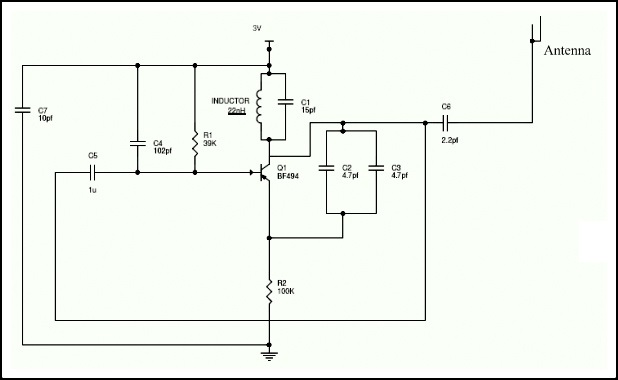
Simple Mobile Jammer Circuit Diagram:

Mobile Jammer Circuit Diagram
Simple Mobile Jammer Circuit Diagram

Cell Phone Jammer Circuit Explanation:

  • If you understand the above circuit, this circuit analysis is simple and easy. For any jammer circuit, remember that there are three main important circuits. When they are combined together, the output of that circuit will work as a jammer. The three circuits are
    1. RF amplifier.
    2. Voltage controlled oscillator.
    3. Tuning circuit.
  • So the transistor Q1, capacitors C4 & C5 and resistor R1 constitute the RF amplifier circuit. This will amplify the signal generated by the tuned circuit. The amplification signal is given to the antenna through C6 capacitor. Capacitor C6 will remove the DC and allow only the AC signal which is transmitted in the air.
  • When the transistor Q1 is turned ON, the tuned circuit at the collector will get turned ON. The tuned circuit consists of capacitor C1 and inductor L1. This tuned circuit will act as an oscillator with zero resistance.
  • This oscillator or tuned circuit will produce the very high frequency with minimum damping. The both inductor and capacitor of tuned circuit will oscillate at its resonating frequency.
  • The tuned circuit operation is very simple and easy to understand. When the circuit gets ON, the voltage is stored by the capacitor according to its capacity. The main function of capacitor is to store electric energy. Once the capacitor is completely charged, it will allow the charge to flow through inductor. We know that inductor is used to store magnetic energy. When the current is flowing across the inductor, it will store the magnetic energy by this voltage across the capacitor and will get decreased, at some point complete magnetic energy is stored by inductor and the charge or voltage across the capacitor will be zero. The magnetic charge through the inductor will decreased and the current will charge the capacitor in opposite or reverse polarity manner. Again after some period of time, capacitor will get completely charged and magnetic energy across the inductor will be completely zero. Again the capacitor will give charge to the inductor and becomes zero. After some time, inductor will give charge to capacitor and become zero and they will oscillate and generate the frequency.
  • This circle run upto the internal resistance is generated and oscillations will get stop. RF amplifier feed is given through the capacitor C5 to the collector terminal before C6 for gain or like a boost signal to the tuned circuit signal. The capacitors C2 and C3 are used for generating the noise for the frequency generated by the tuned circuit. Capacitors C2 and C3 will generate the electronic pulses in some random fashion (technically called noise).
  • The feedback back or boost given by the RF amplifier, frequency generated by the tuned circuit, the noise signal generated by the capacitors C2 and C3 will be combined, amplified and transmitted to the air.
  • Cell phone works at the frequency of 450 MHz frequency. To block this 450MHz frequency, we also need to generate 450Mhz frequency with some noise which will act as simple blocking signal, because cell phone receiver will not be able to understand to which signal it has been received. By this, we can able to block the cell phone signal from reaching the cell phones.
  • So here in the above circuit, we generated the 450 MHz frequency to block the actual cell phone signal. That’s what the above circuit will act as a jammer for blocking the actual signal.

Quantum mechanics to charge your laptop

Quantum mechanics to charge your laptop? FIU prof is on it

Top scientists from UC Berkeley and MIT found the expertise they lacked at FIU. They invited Sakhrat Khizroev, a professor with appointments in both medicine and engineering, to help them conduct research as part of their NSF-funded Center for Energy Efficient Electronics Science.
The group is looking to cut the cord, literally, by finding ways to efficiently power computers of the future. Energy consumption from laptops, huge data centers and every other Internet-connected electronic device is rising exponentially and could impact available resources down the road. To reverse this energy-guzzling trend, the Berkeley-based center is investigating the use of revolutionary nanotechnology—the manipulation of matter on an atomic, molecular and supramolecular scale—to create endlessly charged atomic batteries that could supplant our reliance on the plug.
“I am honored,” says Khizroev of his inclusion on the elite team. His peers tapped him because they needed an expert in something called “the magnetic spin of electrons and spintronic devices,” as he explains it.
Khizroev
In the spin lab: Sakhrat Khizroev, left, with researcher Rakesh Guduru
Discovered in the 1980s, spintronics harnesses the magnetism and constant gyroscopic spin of electrons to process data. With a naturally negative charge, electrons are subatomic particles that orbit around an atom’s nucleus like the rings around Saturn, and their magnetic energy could provide theoretically limitless power.
Such continuous energy would not just solve our mundane (and incessant) need to recharge tablets and cell phones, it could also move computing to the next level. “You can say that our research is a stepping stone towards achieving a holy grail of computer processing known as quantum computing,” says Khizroev of the physics that would allow the crunching of numbers at breathtaking speeds but which currently is constrained by huge energy requirements. “Then anything is possible,” he says. “Eventually it will happen, but we’re not there yet.”
Quantum computing is so complicated that it exists mostly as a theory. That could change with the research taking place in the Berkeley center and in FIU’s labs. In 2013 Khizroev published research on the discovery of the world’s smallest version of an energy-efficient information processing technique, called spin-transfer torque. 
Jeffrey Bokor, deputy director of the center and leader of the nanomagnetics team, calls Khizroev’s work “pioneering.” It is the application of Khizroev’s findings, Boker explains, that will be explored by the center’s researchers as they consider new concepts for computers powered entirely by magnetic devices.
These atomic processes (none of which involves the chain reaction on which nuclear power plants rely) are mind-boggling to any non-engineer, and even many engineers remain skeptical of their application. Like his colleagues at the center, Khizroev has no doubts.
“Nanotechnology is everywhere in the future,” predicts Khizroev, who holds more than 30 patents and is a fellow of the National Academy of Inventors.
At FIU he dedicates 80 percent of his time to medicine and has published academic papers on nanomedicine to treat HIV and ovarian cancer. He is also pioneering the use of nanoparticles to treat brain disorders such as Parkinson’s disease.
But that work took a temporary backseat recently when Khizroev returned to his roots as a physicist and electrical engineer when he invited FIU graduate students Ali Hadjikhani and Mark Stone to travel with him to the Berkeley center for some brainstorming.
“I did not completely forget my old expertise,” Khizroev says, “but it’s more like a hobby. A side project.” 
Hobbyist or not, he remains among the world’s elite researchers seeking novel ways to power the future. 

Thursday, 25 September 2014

transparent computer chip.

transparent computer chip.

new electronic inventionsInventors, Jung Won Seo, Jae-Woo Park, Keong Su Lim, Ji-Hwan Yang and Sang Jung Kang, who are scientists at the Korean Advanced Institute of Science and Technology, have created the world's first transparent computer chip.
The chip, known as (TRRAM) or transparent resistive random access memory, is similar to existing chips known as (CMOS) or metal-oxide semiconductor memory, which we use in new electronics.
The difference is that TRRAM is completely clear and transparent. What is the benefit of having transparency?
"It is a new milestone of transparent electronic systems," says Jung Won Seo. "By integrating TRRAM with other transparent electronic components, we can create a total see-through embedded electronic systems."
The technology could enable the windows or mirrors in your home to be used as computer monitors and television screens.
This technology is expected to be available within 3 to 4 years.

Sunday, 27 July 2014

clean energy -OP-ED

ENERGY WITHOUT BATTERIES

BODY HEAT TO CHARGE CELL PHONES

BODY HEAT TO CHARGE CELL PHONES? Scientists have devised new technology which generates electricity from body heat, allowing you to charge electronic devices on the go. Professor Byung Jin Cho from the Korea Advanced Institute of Science and Technology (KAIST) in South Korea is leading the team working on a thermoelectric (TE) generator, http://iexp.in/KUr82926

Monday, 21 July 2014

Image Processing & Communications

Image Processing & Communications Projects
  1. IMPLEMENTATION OF BQ ALGORITHM & ARITHMETIC CODING FOR DATA COMPRESSION.
  2. NOISE CLEANING USING AVERAGING, MEDIAN AND ROTATING FILTERS & CONTRAST ENHANCEMENT USING GAMMA CORRECTION OF DIGITAL TRUE COLOR IMAGES
  3. IMPLEMENTATION OF EDGE DETECTION TECHNIQUES USING MATLAB
  4. IMPLEMENTATION OF SPATIAL AND FREQUENCY DOMAIN TECHNIQUES FOR IMAGE ENHANCEMENT
  5. IMPLEMENTATION OF HISTOGRAM EQUALIZATION TECHNIQUES
  6. IMAGE COMPRESSION USING BIORTHOGONAL 3.7 WAVELET TRANSFORMS
  7. IMPLEMENTAION OF IMAGE RESTORATION & IMAGE ENHANCEMENT TECHNIQUES USING MATLAB
  8. IMPLEMENTATION OF ALGORITHMS FOR SUCCESSIVE INTERFERENCE CANCELLATION IN CDMA USING MATLAB
  9. IMPLEMENTATION OF WCDMA USING VHDL
  10. IMAGE WATERMARKING USING WAVELETS & DIRECTIONAL FILTER BANKS
  11. MORPHOLOGICAL OPERATORS FOR COLOR IMAGE PROCESSING
  12. THE CURVELET TRANSFORM FOR IMAGE DENOISING
  13. CONTENT BASED IMAGE RETRIEVAL SYSTEM USING PCA

Sunday, 29 June 2014

robotics ideas

ROBO CRAWLER:A ROBOT WHICH CRAWLS &PRODUCES BABY CRYING SOUND IF IT GETS CONTACT WITH WATER/ANYONE LIFTS IT 
ROBO ASTRONAUT:A MODEL OF ROBOT WHICH MOVES BY A CLAP &WALKS FOR A CERTAIN DISTANCE &STOPS 
ROBO DOG:A ROBOTIXC DOG WHICH BARKS WALKS IF STRANGER PASSES FROM ITS SIDE  
ROBO WALKER: A GENERAL ROBOT WHICH WALKS WITH GLOWING EYES IN IT 
ROBO GAURD: IT DETECTS ANY INTRUDER MOVING BY ITS SIDE & MAKES A SIREN & MOVE 
ROBO CRANE:IT LIFTS THE WEIGHT AND MOVE THE ALL DIRECTION 
LINE TRACKING ROBOT: A ROBOT WHICH TRACKS THE LINE &MOVES ON IT 
DOOR OPENING ROBOT:IT OPENS THE DOOR WHENEVER IT SENSES THE HUMAN PRESENSE AT THE ENTRANCE 
SOLAR AMPHIBIAN ROBOT : A SOLAR ROBOT WHICH MOVES ON BOTH LAND AND WATER 
SOLAR ROLLER: A SMALL MODEL OF ROAD DRILLER WHICH USES SOLAR POWER FOR ITS MOTION 
SOLAR CAR:IT IS A NORMAL CAR WHICH MOVES IN CIRCULAR DIRECTION IN THE PRESENSE OF SUNLIGHT 
MICROCONTROLLER BASED INFRARED TRACKING ROBOT WITH STEPEER MOTOR CONTROL ONLY 
LIGHT FOLLOWER ROBOT 
BIG EAR ROBOT 
RF CONTROLLED INTELLIGENT ROBO CAR WITH CORDLESS VIDEO CAM & SENDS  VIDEO&SOUNDS ON MONITOR/TV CONTINOUSLY 
WIRE LESS ROBO CONTROLLER BY PC(12V DC) 
REMOTE CONTROLLER CAR USING RF MODULE 
REMOTE CONTROLLED LANE ROVER A-DIY ROBOTIC PROJECT 
TRACE THE PATH WITH A ROBO CAR 
HEXAPOD MONSTER 
TURNING FROG 
LINE FOLLOWER ROBOT 
SOUND REVERSING CAR 
SOLA WORM,SOLABUG 
SOLACAR,SOLARACER,SOLASTRONG 
POWER SHOVEL DONZER 
4 WHEEL DRIVE CLASSICAL SET 
LINE PATH FINDER REBOT 
ROBOT ARM(MOVING) 
REMOTE CONTROL BOTING FISHTER 
FPZPLA 27 (REMOTE WITH 2 SERVO MOTORS) 
TITAN TANK WIRELESS REMOT CONTROL REBOT 
SPACE NINE INFRARED REMOT CONTROL SOCCER ROBOT 
20 REMOTE CONTROL BOTING FIGHTER BATTLE SET 
REMOTE CONTROLLER BULL DOZER 
WIRE CONTROLLED ROBOT ARM 

Tuesday, 24 June 2014

project ideas

1. AUTOMATED VEHICLES FOR PHYSICALLY AND VISUALLY CHALLENGED
2. COAL MINE DETECT AND RESCUE ROBOT DESIGN AND RESEARCH
3. INTELLIGENT USER INTERFACE FOR HUMAN-ROBOT INTERACTION
4. GPS-BASED PATH FOLLOWING CONTROL FOR A CAR-LIKE WHEELED MOBILE R
5. SKIDDING AND SLIPPING
6. REAL-TIME BLUETOOTH COMMUNICATION SYSTEM FOR CONTROL OF A MOBILE
7. THE DESIGN AND IMPLEMENTATION OF AN AUTONOMOUS CAMPUS PATROL RO
8. DEVELOP A MULTIPLE INTERFACE BASED FIRE FIGHTING ROBOT
9. REMOTE-CONTROLLED HOME ROBOT SERVER WITH ZIGBEE SENSOR NETWOR
10. DESIGN AND IMPLEMENTATION OF INTERNET BASED HEALTHCARE ROBOT SYS
11. DESIGN OF A COLLABORATIVE WHEELCHAIR WITH PATH GUIDANCE ASSISTANC
12. ROBOTIC ARM WITH TWO DEGREES OF FREEDOM
13. BUILDING A SMART HOME ENVIRONMENT FOR SERVICE ROBOTS BASED ON RF SENSOR NETWORKS
14. PICK AND PLACE ROBOT
15. PC CONTROLLED GUIDED ROBOT
16. VOICE CONTROL ROBOT
17. REMOTE CONTROLLED PICK AND PLACE
18. PC CONTROLLED PICK AND PLACE ROBOT
19. GUIDED ROBOT WITH OBSTACLE IDENTIFICATION
20. FIRE FIGHTING ROBOT
21. LIVE SEARCH ROBOT USING MSN LIVE SEARCH
22. AUTONOMOUS ROBOT WITH BUILT IN WIRELESS CAMERA
23. TWO STEPPER MOTOR BASED PICK AND PLACE ROBOT
24. OBSTACLE ROBOTS WITH MULTI SENSORS
25. ULTROSONIC BASED ACCIDENT AVOID ROBOT
26. PASSIVE INFRARED BASED HUMAN ALIVE DETECTED ROBOT
27. LINE FOLLWER ROBOTS
28. FIRE CONTROLLER ROBOT USING WATER SPRAYER
29. GPS BASED POSITION IDENTIFICATION
30. LIVE SEARCH ROBOT WITH GPS
31. VEHICLE TRACKING USING GPS AND GSM
32. LOCALIZATION SYSTEM BASED ON ENHANCED GPS RECEIVER
33. GPS BASED TAXI DISPATCHING SYSTEM
34. DYNAMIC ROUTE MAP IDENTIFICATION USING GPS AND GSM ()
35. EFFICIENT COST-BASED TRACKING OF SCHEDULED VEHICLE JOURNEYS
36. SOFTWARE/HARDWARE CO-DESIGN OF A VEHICLE TRAJECTORY MONITORING SYSTEM
37. INTELLIGENT FLEET MANAGEMENT SYSTEM WITH CONCURRENT GPS & GSM
38. GPS BASED MOBILE TELE MONITORING AND MANAGEMENT SYSTEM FOR INTER CITIES PUBLIC TRANSPORTATIONS
39. DEVELOPMENT OF PEDESTRIAN-TO-VEHICLE COMMUNICATION SYSTEM PROTOTYPE FOR PEDESTRIAN SAFETY USING BOTH WIDE-AREA AND DIRECT COMMUNICATION
40. GPS-BASED PATH FOLLOWING CONTROL FOR A CAR-LIKE WHEELED MOBILE ROBOT WITH SKIDDING AND SLIPPING
41. THE DESIGN AND IMPLEMENTATION OF AN AUTONOMOUS CAMPUS PATROL ROBOT REMOTE SENSING & CONTROL OF AN IRRIGATION SYSTEM USING A DISTRIBUTED WIRELESS SENSOR NETWORK
42. PINPOINTING THE PLACE OF ORIGIN OF A CELLULAR PHONE EMERGENCY CALL USING GPS
43. AUTONOMOUS TRAVELING CONTROL OF THE TAO AICLE INTELLIGENT WHEELCHAIR
44. MONITORING AND TRANSMISSION OF HEAVY VEHICLES PARAMETERS USING FIXED CELLULAR TERMINAL
45. SMS BASED DEVICE CONTROL BASED ON (SIM MODEM)
46. GSM BASED ALERT WITH SMS BASED ON (SIM MODEM)
47. INDUSTRIAL EQUIPMENTâ„¢S PARAMETER MONITORING AN
48. HOME AUTOMATION USING GSM AND RF
49. HOME APPLIANCE CONTROL USING GSM AND RF
50. HOME APPLIANCE STATUS MONITORING USING GSM AND
51. DISTRIBUTED CONTROL SYSTEM USING GSM
52. PATIENT MONITORING USING GSM
53. SMS BASED VOTING SYSTEM USING GSM MODEM
54. GSM BASED WEATHER REPORT
55. VOICE TO SMS USING GSM AND HM
56. ZIGBEE BASED HOME AUTOMATED BILLING FOR ELECTRICTY BOARD WITH SMS ALERTS AND VB
57. ZIGBEE BASED ADHOC NETWORK
58. ZIGBEE BASED DEVICE CONTROL AND MONITORING
59. INDUSTRIAL APPLIANCE CONTROL USING ZIGBEE
60. WIRELESS COMMUNICATION USING ZIGBEE
61. IEEE .. BASED COMMUNICATION
62. IEEE .. BASED ADHOC NETWORK
63. IEEE .. BASED INDUSTRIAL APPLIANCE CONTROL AND MONITORING
64. NAVY SIGNAL LAMP CONTROL AND MONITORING BASED ON IEEE ..
65. AIRPORT SIGNAL LAMP CONTROL AND MONITORING BASED ON IEEE..
66. LOCAL AREA EMBEDDED NETWORK USING IEEE ..
67. AN ON-LINE MONITORING SYSTEM OF TEMPERATURE OF CONDUCTORS AND FITTINGS BASED ON GSM SMS AND ZIGBEE “ IEEE
68. PATIENT MONITORING USING GSM & ZIGBEE FOR HOSPITALS & OLDAGE HOMES “ IEEE
69. BODY AREA NETWORK FOR WIRELESS PATIENT MONITORING “ IEEE
70. AN INTEGRATED ARCHITECTURE FOR DEMAND RESPONSE COMMUNICATIONS AND CONTROL “ IEEE
71. A WIRELESS NETWORK BASED ON THE COMBINATION OF ZIGBEE AND GSM “ IEEE
72. ZIGBEE-BASED ALARM SYSTEM FOR PERVASIVE HEALTHCARE IN RURAL AREAS “ IEE
73. REMOTE POWER ON/OFF CONTROL & CURRENT MEASUREMENT FOR HOME ELECTRIC OUTLETS BASED ON A LOW POWER EMBEDDED BOARD & ZIGBEE COMMUNICATION “ IEEE
74. ZIGBEE DEVICE ACCESS CONTROL & RELIABLE DATA TRANSMISSION IN ZIGBEE BASED HEALTH MONITORING SYSTEM “ IEEE
75. WIRELESS ACCESS MONITORING AND CONTROL SYSTEM BASED ON DIGITAL DOOR LOCK “ IEEE
76. WIRELESS MICROCLIMATE SENSOR “ IEEE
77. A ZIGBEE-BASED POWER MONITORING SYSTEM WITH DIRECT LOAD CONTROL CAPABILITIES “ IEEE
78. DESIGN AND IMPLEMENTATION OF ZIGBEE BASED URC APPLICABLE TO LEGACY HOME APPLIANCES “ IEEE
79. ZIGBEE AND THE UPNP EXPANSION FOR HOME NETWORK ELECTRICAL APPLIANCE CONTROL ON THE INTERNET “ IEEE
80. ZIGBEE BASED DYNAMIC CONTROL SCHEME FOR MULTIPLE LEGACY IR CONTROLLABLE “ IEEE
81. A ZIGBEE NETWORK-BASED MULTI-CHANNEL HEART RATE MONITORING SYSTEM FOR EXERCISING REHABILITATION PATIENTS “ IEEE
82. ZIGBEE WIRELESS SENSOR NETWORK IN INDUSTRIAL APPLICATIONS “ IEEE
83. APPLICATIONS OF ZIGBEE WIRELESS TECHNOLOGY FOR INDUSTRIAL INSTRUMENTATION “ IEEE
84. BLUE TOOTH BASED ( MHZ) E BILLING FOR ELECTRICITY IN HOME
85. AVOID STOP LINE VOILATION USING MICROCONTROLLERS WITH RF
86. VECHILE SPEED CONTROLLERS FOR SAFTEY ZONE USING RF
87. ALERT INDUSTRIAL POLLUTION AND DIVERT THE TRAFFIC USING RF
88. ADVANCE SAFTY LOCKERS BASED ON IC LOGIC “ USERS WITH CODE
89. COMMUNICATIONS BY AIR CRAFT PILOT AND CONTROL ROOM USING NAVIGATION LAMP
90. CONVENTIONAL ELECTIC MOTOR STARTERS CONVERTED TO SOLIDSTATE (SOFT START)
91. DESIGNS FOR INDUSTRIAL RELAY TESTING EQUIPMENT USED BY OEM
92. DESIGN OF DATA TRANSFER BY CONTROLLER TO CONTROLLER
93. LIVE SEARCH ROBOT BASED ON MSN LIVE SERACH USING JAVA/JEE
94. VOICE ACTIVE ROBOTS BASED ON HM SPEECH RECOGNITION IC
95. VOICE ACTIVE ROBOTS BASED ON HM SPEECH RECOGNITION WITH RF
96. AUTONOMOUS ROBOT WITH BUILT IN WIRELESS CAMERA
97. TWO STEPPER MOTOR BASED PICK AND PLACE ROBOT
98. OBSTACLE ROBOTS WITH MULTI SENSORS
99. ULTROSONIC BASED ACCIDENT AVOID ROBOT
100. PASSIVE INFRARED BASED HUMAN ALIVE DETECTED ROBOT
101. LINE FOLLWER ROBOTS
102. FIRE CONTROLLER ROBOT USING WATER SPRAYER
103. RFID BASED PASSPORT TRACKING SYSTEM WITH PHOTO IDENTIFICATION
104. RFID BASED AIR PORT BAGGAGE DISPATCH SYSTEM BY CONVEYOR MODEL
105. LIBRARY BOOK MAINTANCE BY RFID
106. BLOOD BANK BLOOD QUANTITY MAINTANCE BY RFID
107. RFID BASED PREPAID TOLLGATE SYSTEMS WITH MODEL GATE
108. CAR PARKING WITH GATE CONTROLLED BY RFID
109. AVOIDING FALSE VOTE USING RFID WITH PHOTO IDENTIFICATION
110. SECURE ACCESS SYSTEM USING RFID (LIKE LOCKER, DOOR, ATM¦ETC)
111. AUTOMATIC BILLING ON PURCHASE IN SUPPER MARKET USING RFID
112. RFID BASED AUTOMATIC PREPAID PETROL VENDING SYSTEM
113. SMS BASED DEVICE CONTROL USING GSM (SIM MODEM) WITH C
114. GSM BASED ALERT WITH SMS USING (SIM MODEM) WITH C
115. ZIGBEE BASED HOME AUTOMATED BILLING FOR ELECTRICTY BOARD WITH SMS ALERTS
116. RFID BASED PASSPORT TRACKING SYSTEM WITH PHOTO IDENTIFICATION
117. RFID BASED AIR PORT BAGGAGE DISPATCH SYSTEM BY CONVEYOR MODEL
118. LIBRARY BOOK MAINTANCE BY RFID
119. BLOOD BANK BLOOD QUANTITY MAINTANCE BY RFID
120. RFID BASED PREPAID TOLLGATE SYSTEMS WITH MODEL GATE
121. CAR PARKING WITH GATE CONTROLLED BY RFID
122. AVOIDING FALSE VOTE USING RFID WITH PHOTO IDENTIFICATION
123. SECURE ACCESS SYSTEM USING RFID (LIKE LOCKER, DOOR, ATM¦ETC)
124. AUTOMATIC BILLING ON PURCHASE IN SUPPER MARKET USING RFID
125. RFID BASED AUTOMATIC PREPAID PETROL VENDING SYSTEM
126. RFID BASED VOTING MACHINE
127. RFID BASED ATTENDENCE SYSTEM
128. LIBRARY MANAGEMENT SYSTEM USING RFID
129. AN INTELLIGENT MOBILE ROBOT NAVIGATION TECHNIQUE USING RFID TECHNOLOGY
130. HOSPITAL AUTOMATION RFID-BASED
131. PINPOINTING THE PLACE OF ORIGIN OF A CELLULAR PHONE EMERGENCY CALL USING ACTIVE RFID TAGS
132. GIDS “ A SYSTEM FOR COMBINING RFID-BASED SITE INFORMATION AND WEB-BASED DATA
133. FOR VIRTUALLY DISPLAYING THE LOCATION ON HANDHELD DEVICES
134. MOBILE RFID TRACKING SYSTEM
135. SHOPPING PATH ANALYSIS AND TRANSACTION MINING BASED ON RFID TECHNOLOGY
136. LOW COST SMARTCARD TICKETING SYSTEM
137. A RFID-BASED MATERIAL TRACKING INFORMATION SYSTEM RADIO FREQUENCY IDENTIFICATION
138. THE RESEARCH ON BLIND NAVIGATION SYSTEM BASED ON RFID
139. INTELLIGENT PARALLEL PARKING OF A CAR-LIKE MOBILE ROBOT USING RFID TECHNOLOGY
140. MOBILE PHONE BASED RFID ARCHITECTURE FOR SECURE ELECTRONIC PAYMENTS USING RFID CREDIT CARDS
141. THE IMPLEMENT OF RFID IN EMERGENCY MEDICINE
142. RFID-BASED INTELLIGENT BOOKS SHELVING SYSTEM
143. INCREASING THROUGHPUT AND PERSONALIZING THE EXAMINATION PROCESS IN UNIVERSITIES USING RFID
144. IMPLEMENTATION OF RFID TECHNOLOGY IN PARKING LOT ACCESS CONTROL SYSTEM
145. AN ELEMENTARY ELECTRONIC VOTING PROTOCOL USING RFID
146. INVENTORY MANAGEMENT WITH AN RFID-EQUIPPED MOBILE ROBOT
147. RFID BASED INTELLIGENT SYSTEM FOR HOME “HEALTH CARE
148. THE ELECTRONIC PASSPORT: THE FUTURE OF GOVERNMENT-ISSUED RFID BASED IDENTIFICATION
149. RFID-BASED HOSPITAL REAL-TIME PATIENT MANAGEMENT SYSTEM
150. CONTEXT-BASED RECOMMENDER SYSTEMS IN CONVENTIONAL GROCERY“AN ECONOMI ANALYSIS
151. SMART PARKING APPLICATIONS USING RFID TECHNOLOGY
152. ENABLING RFID IN RETAIL
153. AN EFFICIENT LOCALIZATION ALGORITHM FOR MOBILE ROBOTS BASED ON RFID SYSTEM
154. SAFETY DRIVING SUPPORT SYSTEM USING RFID FOR PREVENTION OF PEDESTRIAN- INVOLVED ACCIDENTS
155. AUTONOMOUS TRAVELING CONTROL OF THE TAO AICLE INTELLIGENT WHEELCHAIR
156. DECISION SUPPORT SYSTEM FOR EXCEPTION MANAGEMENT IN RFID ENABLED AIRLINE BAGGAGE HANDLING SYSTEM
157. HELPING TO COLLECT TRAFFIC INFORMATION USING RFID TAG IMPLEMENTED ON URBAN BUS FOR TRAFFIC INFORMATION
158. AUTOMATION OF TIME AND ATTENDANCE USING RFID SYSTEMS
159. Real time Clock SPI Interface.
160. Auto Dialer.
161. Automatic EB Billing.
162. Access Control System Voice Output.
163. Ultrasonic based distance measurement.
164. IR communication with Manchester encoding/decoding.
165. RF communication with Manchester encoding/decoding.
166. Dot matrix scrolling display.
167. Winding machine control.
168. Automatic street lamp operating.
169. Home security system.
170. Study of SPI interface.
171. Study of IC interface.
172. Braille machine for blind.
173. Multipurpose on/off timer module with loss regain.
174. IR based robotic control.
175. RF based robotic control.
176. Optical robot.
177. Robotic based Measuring diameter ,length and weight of a Bar.
178. Three phase ups monitoring.
179. Inverter control.
180. Single/three Phase voltage control .
181. Industrial inverter battery monitoring and control.
182. Automatic car parking system monitoring.
183. Smart card based accessing/attendance maintenance system.
184. Fire/temperature monitoring system and control.
185. Call point management system for hotels.
186. IEEE LATEST PROJECT TITLES
187. Staffing Level and Cost Analyses for Software Debugging Activities Through Rate-Based Simulation Approaches.
188. Implementation of the Storage Manager for an IPTV Set-Top Box.
189. Strategic Guidance in the Development of New Aircraft Programs: A Practical Real Options Approach.
190. Using Open Web APIs in Teaching Web Mining.
191. Context-Based Matching and Ranking of Web Services for Composition.
192. Correlation Clustering Based on Genetic Algorithm for Documents Clustering.
193. Distributed Structures, Sequential Optimization, and Quantization for Detection.
194. Intrusion Detection in Homogeneous and Heterogeneous Wireless Sensor Networks.
195. Performance of the IDS Method as a Soft Computing Tool.
196. An Artificial Neural Network Based Method for Harmonic Detection inpower system.
197. Extension of a Soft-Computing Framework for Activity Analysis from Linguistic Summarizations of Video.
198. Distributed Decision and Control for Cooperative UAVs Using Ad Hoc Communication.
199. A GA-Based Effective Fault-Tolerant Model for Channel Allocation in Mobile computing.
200. An Efficient Time-Bound Hierarchical Key Management Scheme for Secure broadcasting.
201. On the Computational Complexity and Effectiveness of N-hub Shortest-Path Routing.
202. Provable Protection against Web Application Vulnerabilities Related to Session Data Dependencies.
203. Efficient Approximate Query Processing In Peer To Peer Networks.
204. Semantic web services on query based system for automatic invocation.
205. An Anti-phishing Strategy Based on Visual Similarity Assessment.
206. A General Model of Probabilistic Packet Marking for IP Trace Back.
207. Diversity-Integration Trade-offs in MIMO Detection.
208. Wallet Based Flexible E-Cash System.
209. NIRA Full code.
210. A Blog Mining Framework.
211. A Unified Framework for Providing Recommendations in Social Tagging Systems based
212. on Ternary Semantic Analysis.
213. A Web Usage Mining Framework for Mining Evolving User Profiles in Dynamic Web Sites.
214. iOLAP: A Framework for Analyzing the Internet, Social Networks, and Other Networked
215. Data.
216. Truth Discovery with Multiple Conflicting Information Providers on the Web.
217. The Context “ Based Image Retrieval System.
218. Web People Search via Connection Analysis.